

While Thailand’s overall digital wellness is gradually improving, the majority of its citizens remain at a “basic” level, with children and the elderly identified as the most vulnerable groups facing significant risks.
The latest “Thailand Cyber Wellness Index 2025” from AIS highlights critical gaps in the public’s understanding of digital rights and, for the first time, reveals a moderate but concerning level of AI literacy, underscoring an urgent need for targeted education.
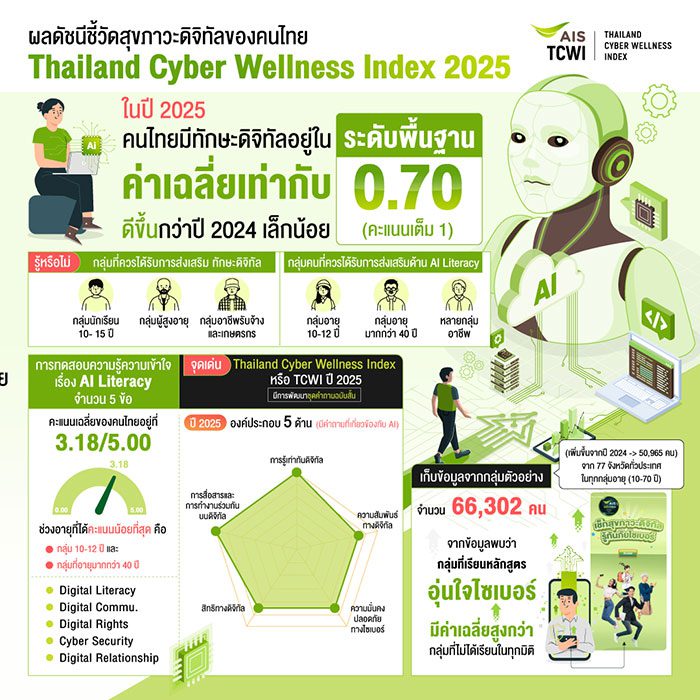
The comprehensive nationwide study, now in its third year, surveyed 66,302 people across all 77 provinces to measure the population’s knowledge, skills, and behaviors in safely and ethically navigating the digital world. The 2025 findings show an average score of 0.70, classifying the nation’s digital health as “Basic.”
A key focus of this year’s report was the introduction of an AI Literacy assessment, a skill deemed essential in the current technological landscape. The survey found the national average to be at a moderate 3.18 out of 5.00.
However, the lowest scores were recorded among children aged 10-12 and adults over 40, indicating a significant disparity in understanding AI technologies and the potential risks of their misuse.
Furthermore, the index revealed a persistent lack of in-depth understanding regarding Digital Rights and Digital Communications. Many Thais are still not fully aware of their rights to privacy, freedom of expression, and equal access to information, which is crucial for fostering a responsible and respectful online culture.
Saichon Submakudom, Head of Corporate Communication and Public Affairs Business Unit at AIS, said that AIS has consistently prioritized promoting the safe and responsible use of digital technology through our AIS Aunjai Cyber program. This year’s index underscores that promoting AI literacy has become a key priority to prepare Thai digital citizens to face the future with confidence and safety.
AIS also affirmed the effectiveness of its educational initiatives, citing a collaborative experimental study with King Mongkut’s University of Technology Thonburi (KMUTT). The research confirmed that participation in the “Aunjai Cyber” curriculum significantly improves an individual’s digital wellness.
“We firmly believe that building a safe and inclusive digital society must begin with education and skills tailored to different age groups, especially for vulnerable populations like children and the elderly who require dedicated and continuous support,” Submakudom added.
AIS positions the Thailand Cyber Wellness Index as more than just a metric; it is a foundational “compass” for the nation. The company intends for the data to guide national policies, shape educational curricula, and foster collaboration between public and private sectors to narrow the digital divide and strengthen Thailand’s long-term cyber resilience.
For individuals interested in assessing their own digital wellness, AIS has made the tool publicly available at https://aunjaicheck.ais.th. The full 2025 index report can be accessed at the AIS sustainability portal.
GULF-Singtel-AIS Alliance Lands $200M for Sustainable Data Center
Meta and Government partners share 4 top tips to combat job scams